INDONESIAN SOLDIERS IN TIMOR LESTE
IN BATTLE, WAR AND PEACE
A Reflection on the Anniversary of the Indonesian Military (TNI), October 5, 2023
By AM Hendropriyono*
The Cold War, which lasted from 1945-1989 due to an ideological clash and political and economic interests between the Western Block and the Eastern Block, misled Indonesia, culminating in its invaded of Timor Leste on December 7, 1975. The invasion was based on intelligence estimates that were in accordance with the domino theory, which held that after Communist forces won the war against the United States (US) in South Vietnam in 1974, Southeast Asia, especially Indonesia, would also fall into the hands of international Communism. Seen in the context of the Carnation Revolution that occurred in Portugal as led by young communist/socialist military officers, it was estimated that those who proclaimed their independence as the state of Timor Leste on November 25, 1975, would become a power base for attacking Indonesia. Because of this, the US sent military equipment and weapons to strengthen the Indonesian military, such as the Rockwell OV-10 tactical fighter aircraft, the Lockheed Martin C-30 transport aircraft, and the Cadillac Gage V-150 Commando APC.
The politics of war at the international level, which were dominated by the US, encouraged the political decisions made by the Indonesian government, such that a series of successful battles carried out by ABRI (Armed Forces of the Republic of Indonesia) resulted in the inclusion of Timor Leste as the 27th province of the Republic of Indonesia (RI), then known as East Timor, on July 17, 1976. International politics shifted 23 years later, influencing the Reformation-era Indonesian government to immediately relinquish East Timor in 1998 following a referendum conducted under the direct supervision of the United Nations (UN). This sudden government political decision was still subject to military politics. Although this decision was not preceded by bilateral negotiations between Indonesia and Timor Leste, an official announcement of a ceasefire was made between ABRI and FALINTIL (Forcas Armadas da Libertacao Nacional de Timor Leste or Armed Forces for the National Liberation of East Timor) and the idea was raised for both sides to withdraw their forces.
This made ABRI's task very difficult, as if trying to suddenly stop a vehicle traveling at high speed. The government's move to form a Referendum Implementation Security Team, led by the Coordinating Minister for Political and Security Affairs of the Republic of Indonesia, on May 11, 1999, came too late, as the peripheral pro-independence movement for East Timor had already spread throughout the province since 1998. This disintegration movement even spread at the national level and resonated strongly in international forums, which was addressed by the Western world and the UN, paradoxically at odds with their own stance towards Indonesia in 1975. Many ABRI soldiers, known for their bravery on various battlefields, were able to carry out their new duties to uphold peace, security and order for the sake of the referendum, despite the heavy psychological and physical sacrifices they had to make. This ability was due to the good personal relationships they had developed with the people of Timor Leste and never personally hating their enemies, even in a conflict situation. It was always the state which determined who was a friend or foe of ABRI in times of war. Once the Indonesian Province of East Timor became the independent country of Timor Leste, the relationship between the Indonesian Military (TNI) and Falintil became close.
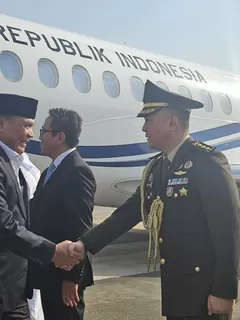
In addition to Kiki Syahnakri and other officers, I also remember Johannes Suryo Prabowo, who in the past held the rank of First Lieutenant and was known as a brilliant soldier on the battlefield. On May 20, 2002, holding the rank of Brigadier General, he reappeared in the Republic of Timor Leste as Commander of the Security Task Force for the President of the Republic of Indonesia, to attend the country's independence ceremony in Tasi Tolu. The exchange of information was well established with BIN (State Intelligence Agency), which I lead, and the duty to provide for its security was well accomplished. As Head of BIN, I personally preceded the delegation of the Head of State of the Republic of Indonesia two weeks earlier, which gave me quite a long time to interact with the intelligence ranks of that country, and I even had direct contact with its first President, Kay Rala Xanana Gusmao. We also cooperated to rebuild the Seroja Heroes of the Republic of Indonesia Cemetery, which is close to their Santa Cruz Cemetery, symbolizing an eternal tribute to our nation's heroes, after the fighting had ended.
At Falintil’s 47th Anniversary ceremony in 2022, Timor Leste President Jose Manuel Ramos Horta awarded the Ordem de Timor Leste Highest Star to TNI Commander General Andika Perkasa. I saw action in several battles with the Failintil guerrilla army in Laklubar, Aitara and Soibada from 1976-1978.
*Chairman of the Senate Council of Professors of the Military Law College.
Professor at the State Intelligence College.
Professor Emeritus of the Indonesian Defense University.